

Safety guides
How a professional fireworks display is kept safe
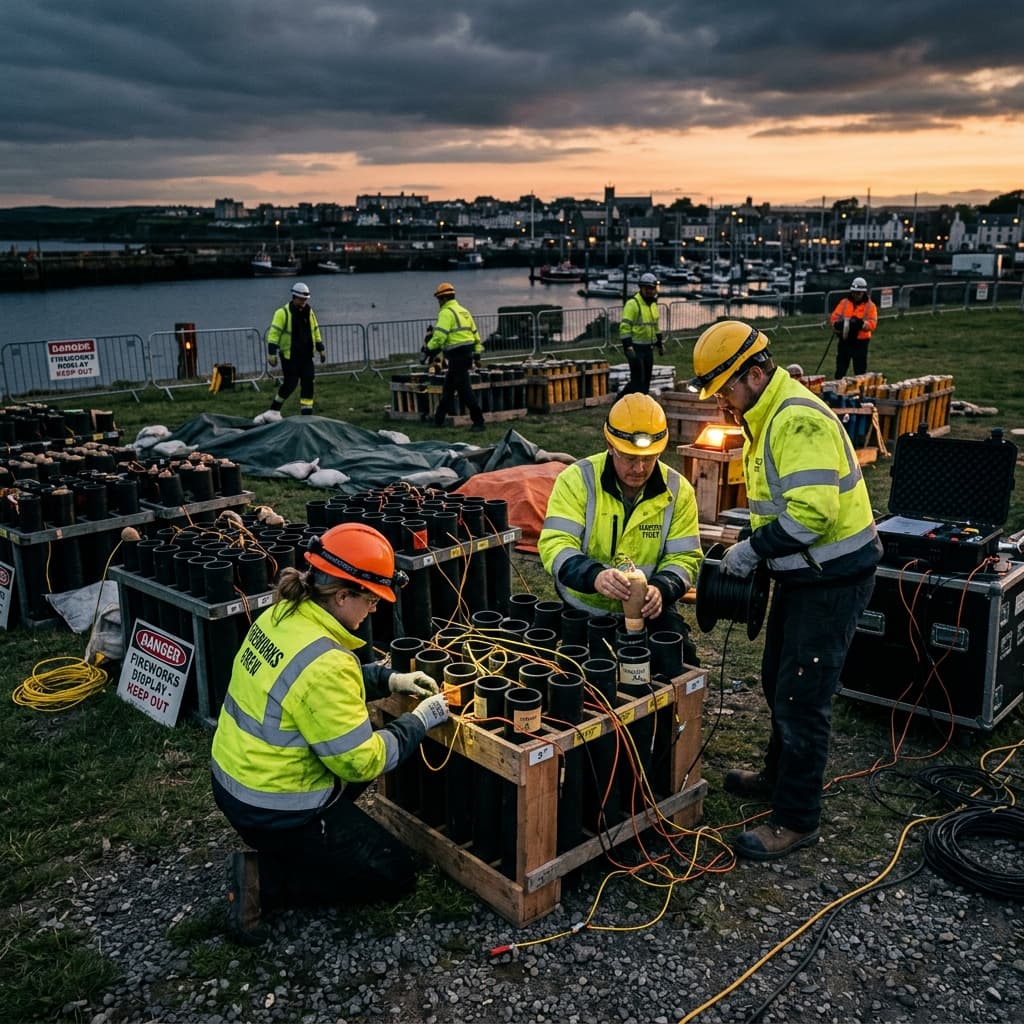
A fireworks show looks like pure spectacle, but underneath it is a long checklist that starts weeks before the first shell goes up. Here is how a licensed team keeps a display safe — and what to look for when you hire one.
Licensed people, licensed products
Every legitimate display company in the Philippines operates under licenses from the PNP Firearms and Explosives Office. The crew handling the product are trained for it, and the fireworks themselves come from licensed manufacturing — in our case, our own workshop in Cabuyao, Laguna, where we have made fireworks since 1948. If a company cannot show you its license numbers, walk away. Ours are printed at the bottom of every page of this site.
Permits before powder
Before a single rack is placed, a display needs paperwork: a permit for the event itself, coordination with the local fire department, and clearance from the city or barangay where the show will fire. We handle this for our clients, because we know exactly what each office needs. It is also why a good display company asks for lead time — permits cannot be rushed the week of the event.
The safety zone
The heart of display safety is distance. Around the firing site we set a clear zone that scales with the size of the largest shell — the bigger the shell, the wider the circle. Nobody but crew goes inside it: no guests, no vendors, no parked cars, no photographers chasing a closer angle.
- The audience stands outside the zone, ideally upwind, so smoke and fallout drift away from them.
- We check what is above and behind the site too: wires, trees, rooftops, and anything that could catch falling debris.
- Barriers, tape, or marshals mark the line so the crowd always knows where it can and cannot stand.
Watching the weather
Wind is the deciding factor on show night. A steady breeze is fine — it carries smoke off and keeps the sky clear. Strong or shifting wind pushes burning fallout where it should not go, so we measure it, watch its direction, and adjust the layout or hold the show if we have to.
During the show
While the sky does its work, the crew is heads-down on theirs. Firing is run from a safe distance — for our pyromusicals, by computer. Spotters watch the racks, the sky, and the crowd line, and any one of them can stop the show. A pause in a display is almost never a malfunction; it is usually the crew double-checking something. That is the system working.
After the last shell
The show ends for the audience at the finale; for us, there is one job left. The crew waits, then sweeps the entire firing area for any shell that did not fire. Nothing is packed up and the site is not released until that sweep is done. By the time the lights come back on, the field is as safe as it was in the afternoon.
If you are planning an event and want a display run this way, talk to us — safety is included, not extra.
Fireworks questions are our favorite kind. If this guide left you wondering about your own event, venue, or budget, send it our way — advice is free.
Plan a displayKeep reading more from the journal
 Safety guidesFirst aid for fireworks burns and injuriesThe first minutes matter most. What to do for burns, eye injuries, and blast wounds — and the common home remedies that make things worse.Read this
 Safety guidesNew Year fireworks safety at home: a guide for Filipino familiesSimple, practical rules for a fun and injury-free Media Noche — what to buy, what to avoid, how to set up your space, and how to keep the kids safe.Read this
 Safety guidesAre fireworks legal in the Philippines? Rules in plain EnglishYes, with rules. What RA 7183 allows, which firecrackers the PNP bans, what EO 28 changed, and why your city's rules matter — explained in plain English.Read this